

I love to drive, any country, any side of the road. But three days into our tour of World War I battlefields near Verdun, Ed and I found ourselves stranded in a parking lot, a tow truck on the way. The mechanic, a man of few words even in French, looked at our car and pronounced the situation “grave.” His garage was in Étain, a small village in the Meuse area — a dot on the map, not the smallest dot, but small.
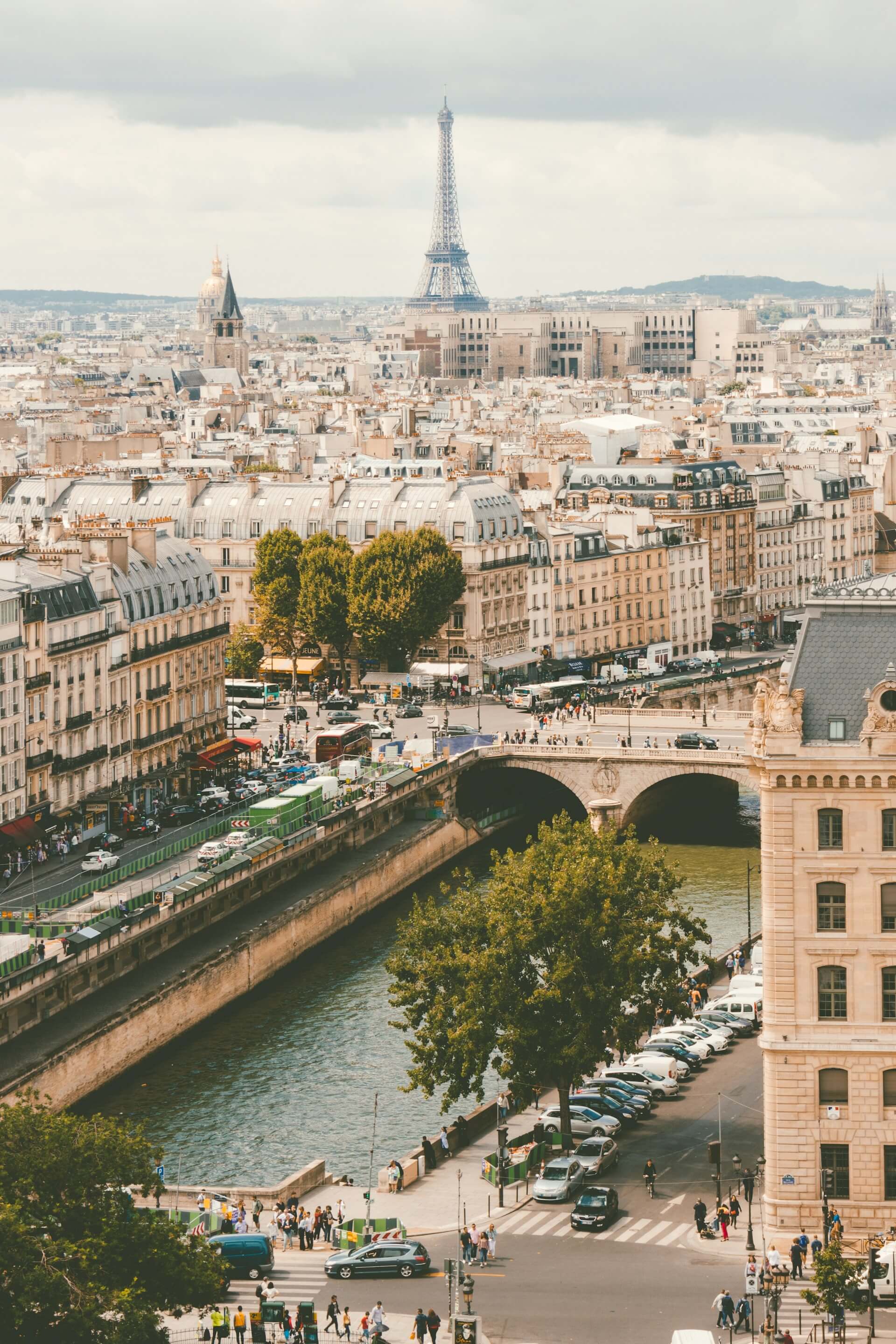
The journey began in Paris. The concierge called us a cab, and we set off for a rental car agency on the Rue de Rivoli. Only the driver could not locate the street number. We went up and down, double-checking to ensure we had the correct address. Yes, it said 99 Rue de Rivoli. It also said Carrousel du Louvre. The Louvre was in sight, but surely there wouldn’t be a rental car office in the museum. Finally, I got out of the taxi and onto the sidewalk, looking high and low.
Flummoxed and frustrated, I was about to give up when I glimpsed a promising passageway. A plain black door – not even a door, more like a hole in the wall – led underground to an enormous shopping mall beneath the Louvre. There were clothing boutiques, a Starbucks, an Apple Store and, tucked in a corner, a Hertz rental office.
After the agent explained the contract, I signed it, and we were off. Up an unnervingly steep ramp and down a road that paralleled the Seine, breezing past the spires of Notre Dame and Sainte-Chapelle. Then a brisk left and out of town.
Three days later, we pulled into a filling station. What type of gas did we need: regular or gazole? Neither our rental contract nor the manual had information. Cars were queueing up behind us, and there was only one pump.
I spotted a mechanic working in the garage. I knew Ed wouldn’t ask him. He’s like the old joke about Moses wandering around the desert for 40 years because he wouldn’t ask for directions.
I was about to ask the mechanic myself when a tall, well-muscled woman came out of the office to help. Ed was having trouble getting the pump nozzle into the car, and the driver behind us was growing ever more impatient. The woman took over and, with linebacker strength, twisted and pushed until it fit.
Grateful for her help, we set off to pay our respects in an American cemetery — to the heart-tugging rows of white crosses, so many, so young, and, at noon, a carillon playing “America the Beautiful.” Tears welled, then slipped down my cheek. The bravery, the sacrifice, the scars that last forever. The immensity of it all.
It was on our way back to our farmhouse lodging near Verdun that the car began to tug and chug. I kept my foot on the accelerator, but the car was pushing back. Nevertheless, we decided to stop at a grocery store outside the tiny town of Étain to get provisions. After almost an hour of travel, I thought the car would get us to the farmhouse so we could investigate further. But when we left the store, the car would not start. No cranking, grinding or whirring. Just nothing.
My heart sank, and panic began, with nerves in flight mode but nowhere to go. Ed, as usual, more controlled, but apprehensive all the same.
We called Hertz for help, and eventually a mechanic arrived with a large flatbed truck. As shoppers gathered to rubberneck, he hooked our car up to the truck to haul it back to his garage. We rode shotgun in the high front seat.
“Il faut vider le réservoir,” announced Monsieur le mécanicien. The car we were driving needed diesel to operate, not regular gas. He would have to siphon what was left, and even then, using regular gas could have damaged it beyond repair.
We waited while he drained it, pacing around the nearby mairie (town hall). Ed calculated how much we would have to pay to replace the car: at least 15,000 euros. Beyond that, hundreds more to tow it away. And how would we get back to the farmhouse, which was 24 kilometers away? The village was closing down, shopkeepers were shuttering, I have abandonment issues, and it was beginning to feel like a ghost town.
The mechanic kept working as the sunny September day became markedly cooler. By the two-hour mark, as night fell, I was even more panicked. Where would we sleep? Did they have taxis in this village? Why didn’t Ed know diesel was a thing in Europe?
Around dinner time, the mechanic’s wife came down from their apartment above the store. She didn’t speak English either. But sensing my angst, she offered to drive us back to our lodging, and we could pick up the repaired car tomorrow. I wanted to hug her, a large woman at the wheel of a tiny Renault, but an angel to me.
The next morning, our car was ready, and the farmhouse owner drove us back into town. Monsieur had successfully drained and replaced the fuel tank.
It never occurred to us that a Ford Focus would require diesel. Had we not listened carefully enough to the agent at the Louvre shopping center? Had we just been too frazzled trying to find the place? Or maybe even Amazons working at French filling stations don’t always know what type of fuel to pump.
Still pondering, I slid behind the wheel and re-adjusted the driver’s seat. Monsieur had moved it back to fit his frame. From that new position, I noticed for the first time something shiny beneath the steering wheel, not visible at the previous angle. A little silver label engraved into the wheel’s base. It said Gazole. French for diesel.
Comments