

Hidden Gems of San Miguel de Allende
When most North Americans think of Mexico, they think beach resorts, Mexico City, pyramids… and cartels. But Mexico is a large, culturally and biologically diverse country not easily categorized, much like the United States. One must use common sense to avoid known gang and crime areas anywhere in the world.
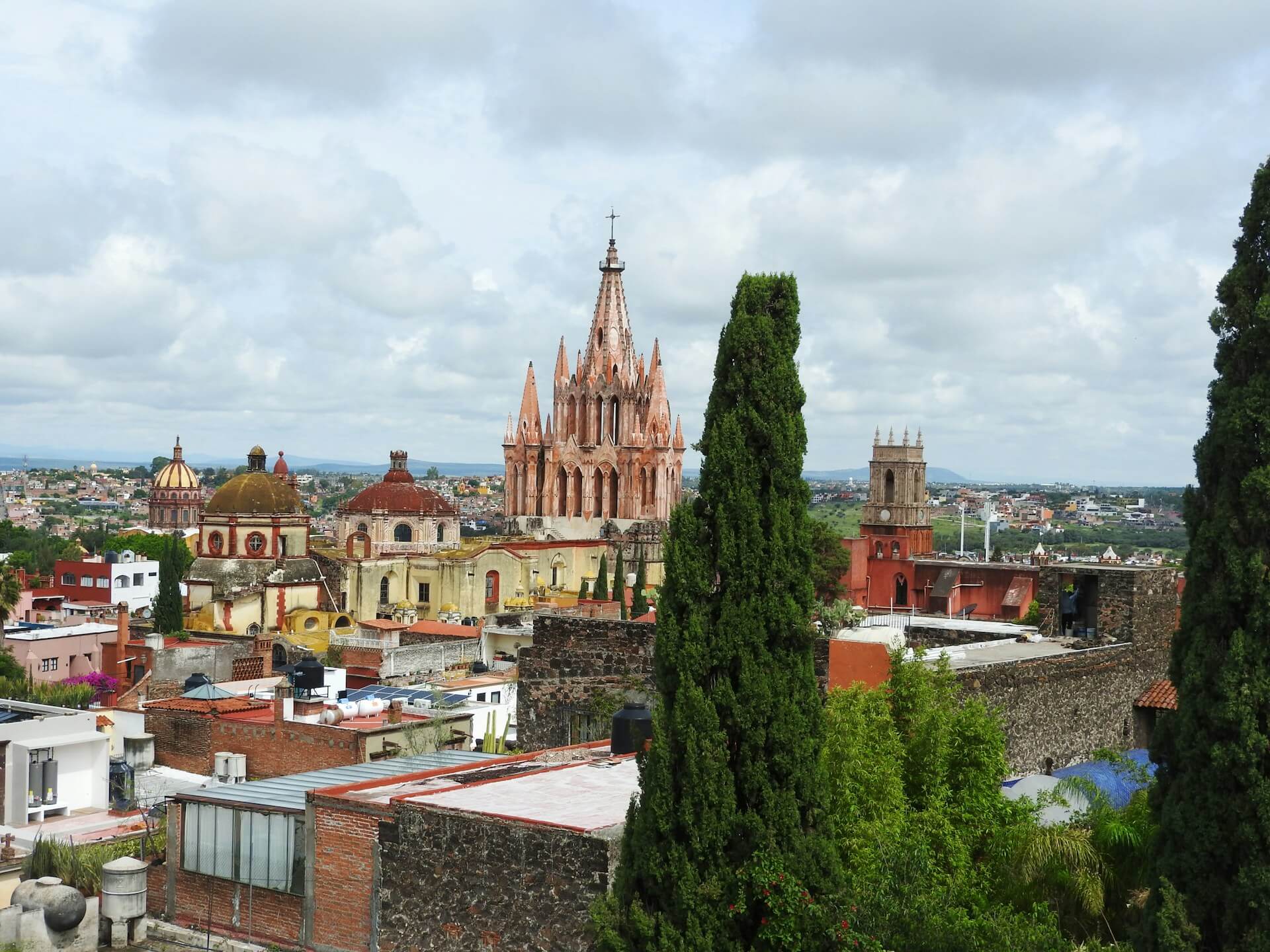
My wife and I have visited San Miguel de Allende four times and will shortly leave for our fifth trip. A UNESCO World Heritage site, San Miguel de Allende is famous for its Spanish colonial baroque and neoclassical architecture. The buildings have colorful facades, often adorned with ornate stone carvings and heavy wooden doors, some dating to the 18th century. Stone-paved streets and intimate courtyards with elaborate fountains are commonplace.
The tourist books extol the many wonderful sights to see: Parroquia de Archangel Miguel, Sanctuario de Atotonilco, La Gruta Spa, Biblioteca Pública, Museo de la Esquina, Galleria de Atotonilco, and Mercado Ignacio Ramirez, to name a few. We have visited all these and many other wonderful destinations.
But there are some fascinating destinations not in the tourist books. I want to share my experience at two wonderful places: Museo de la Mascara (Mask Museum) and Rancho Via Orgánica.
Museo de la Máscara
“ Is this the place? The Uber driver has dropped us off in a residential neighborhood on a hill in San Miguel de Allende. No signage, just a heavy wooden door. We ring the bell. “Hola, estamos aquí para el recorrido”. (We are here for the tour. We hear a buzz and push the door open.)
We enter a cavernous courtyard with a fountain. It has a terracotta clay base decorated with folk art figurines. The back is a dark blue tile. There are two terracotta clay bowls, one halfway up, the other near the top. The fountain sits on a cobblestone floor surrounded by plants. There is a mural of a dancing señora in a red, flowery dress. A cylindrical ceramic piece depicts an indigenous family. Several masks sit on indented shelves in the walls with glass covers.
We climb the stairs, open the door, and enter a room where 20 people are gathered. Greeted by a 70-something North American man wearing an LL Bean plaid shirt, vest, and casual slacks. He gives a 30-minute lecture on indigenous tribes and how the museum came to be. He is engaging and humorous, passionately sharing with anyone who listens. Admission is a hundred pesos ($5) donation.
The house and museum were built on bare ground in 1997. After his world travels in a corporate job, he decided to move to San Miguel de Allende to pursue his passion. With no academic credentials, he spent 26 years in the field with an archaeologist. He learned about indigenous cultures that have preserved and passed down their traditions for generations. He acquired indigenous masks used in ceremonies, becoming an expert and university lecturer.
There are 64 languages recognized in the Mexican Constitution, concentrated in southern Mexico. These tribes were never conquered by the Conquistadores because they lived mostly in remote mountainous areas or deserts.
Indigenous owners of the masks often refused to part with them as they were inherited from their great-grandfathers. They sometimes offer a less cherished mask, the ones displayed in the museum.
The museum spans three rooms. We examine each amazing mask. Several catch my eye: one with a toothy open mouth, black dye under the eyes and nose, gray hair, and a beard; another with white eyes, red-tipped, smiling, with tufts of brown hair and beard; a third with red cheeks, eye holes, bushy eyebrows, and a beard.
A map on the wall shows the location of every indigenous tribe.
A streaming video shows masks worn during ceremonies, rooted in pre-Hispanic traditions. Masks are used in ritual dances that transform the dancer into a spirit, an ancestor, or a deity, while praying for community welfare and prosperity. The masks often appear as jaguars, serpents, deer or coyotes, the devil, mocking Spaniards, satirical figures, clowns, or old men.
Indigenous tribes in Mexico struggle to balance their traditions while simultaneously facing the challenges of minorities living in the modern world: poverty, lack of access to health, education, housing, and systematic discrimination, impacting their cultural survival.
I’m thinking these thoughts while at the same time enthralled by the colorful variety, shapes, and creativity of masks in this off-the-tourist-route hidden gem. Still in the museum after most have left, the owner invites me into a room with masks for sale. The first mask that catches my eye is $20,000 (dollars). Time to move on. Then I see it. The curator’s catalog labels it Payoso (clown). It was made by the Totonac tribe in the State of Veracruz. It’s pink-colored, smiling, with black irises, holes instead of eyebrows, and blue and red face paint. It now adorns my living room wall.
indigenous culture
celebrated with ornate masks
link past and future
Rancho Vía Orgánica
In 2000, Señora Rosana Alvarez, a fourth-generation resident of San Miguel de Allende, grew tired of traveling between San Miguel and the US, where she and her American-born husband had sold Mexican folk art for years. She decided to settle down, opened an organic grocery, visited farms, learned about organic farming, and embraced sustainable agriculture.
A chance meeting with the President of Sustainable Farms Association, a Minnesota non-profit, encouraged her to set up a sustainable farm and provided the funding to get started. In 2006, Rosanna bought several hundred acres of semi-arid land near San Miguel de Allende.
Fast forward 20 years. Rancho Vía Orgánica is fully functional, with acres of covered vegetable beds grown without pesticides, free-range cows, chickens, turkeys, and rabbits, raised without hormones.
Every building has gutters to collect rainwater. Human and animal waste is composted, enriching nutrient-deficient desert soil. Equipment runs on solar power. Interns, students, and graduates of agricultural colleges, mostly young women, learn by doing. They are treated like family and later return to their own family farms to implement what they have learned.
We were the only diners at the restaurant, which served food grown and prepared on-site, including rabbit burgers, a common dish in Mexico. We didn’t have the heart to order it after seeing the cute bunnies on the tour. Señora Alvarez pulled up a chair to chat with us, the kind of friendliness you come to expect in Mexico.
Rosanna’s latest ambitious initiative- the billion agave project, a ground-breaking approach for rehabilitating semi-arid lands. Agave plants and nitrogen-fixing trees are planted, requiring little or no irrigation, which is essential in a low-rainfall area. Agave leaves are pruned, crushed, and placed in containers in anaerobic conditions. Thirty days later, this material becomes animal feed, good for up to 30 months if properly stored. Overgrazing impacts have been reduced. Soil health and water retention improved.
It's exciting to see this type of community grassroots project take off.
starting with a small egg
hatching and growing
determination
by an inspiring woman
making a difference



Comments