

For a long time, I thought I began writing because I wanted to be a writer. Today I know that isn’t true. I began writing because I was a reader — and because, long before I understood what “technique”, “style” or “publishing” meant, I already understood something simpler and deeper: words had a place inside me.
Before school properly began, I was already decoding letters as if opening doors. I read syllable by syllable, word by word, and felt a kind of private electricity when meaning appeared — even advertisements and lists felt like secrets waiting to be unlocked. Reading was, from the start, a quiet enchantment I wanted to master.
At home, that hunger was fed with a naturalness that still moves me today, largely thanks to my father, who never questioned or discouraged my appetite for books.
Then there was an inaugural moment — one of those that stays lodged in the body, like a scent that never fades. A Círculo de Leitores catalogue lying on my grandmother’s kitchen table, glossy and full of promise. I didn’t want “a book”; I wanted that one. And that was how I chose The Black Tulip. Perhaps because of the title. Perhaps because of the cover. Perhaps because, even then, I had already developed a fascination for Dumas and for adventures that made the heart race.
I still remember the plastic being peeled away, the row of twelve books lined up, their weight and texture, the sound of the pages. For me, books have always been sensory objects — almost alive. And reading, long before I knew what writing was, began there to shape something essential: the way I saw the world.
At primary school, writing did not appear as a heavy obligation, but as a natural continuation of reading. My teacher, Dona Mercedes, gave us compositions with simple, almost innocent titles: What do you want to be when you grow up? It’s raining — what will you do after school? Tomorrow is Saturday — what are your plans? Or even, If tomorrow were the year 2050, what do you think the world would be like?
At the time, I wrote without thinking much about it. Only later did I realise how important those exercises were. They planted a fundamental seed. They taught me to imagine, to organise thought, to trust that my voice — however small — had a place on the page. Writing entered my life as habit before it became challenge.
At home, language also arrived through voice. My grandfather was a history teacher, and a simple question about Portugal’s past was enough for him to turn the answer into a long, enthusiastic explanation. He spoke of centuries as if they were familiar people. My cousins often lost patience; I listened.
Only later did I understand that I had learned another essential lesson there: the ear also writes. I learned rhythm, cadence, pause. I learned that a good story depends not only on what is said, but on how it is said. History became living narrative, and listening was — without my knowing it — a form of learning how to write.
As time passed, I realised that the reading that truly shaped me as a writer did not stop with the books assigned at school. Those were important and gave me references, but it was outside the curriculum that my curiosity expanded. I began to seek out authors I had not been given, voices from other countries, other cultures, other sensibilities. Each book was a displacement.
Language became more conscious, more demanding. And quietly, my writing began to change. For a long time, I wrote only for myself. I rewrote, deleted, persisted. I read far more than I showed. Gradually, I began to recognise a voice — still fragile, still forming, but mine.
During that period, I tried to join other writers and poets. Many wrote according to strict rules, fixed metres, and strong formal awareness. That made me nervous — and, to be honest, it still does. Writing in that way felt as though it pulled me away from what truly moved me.
I do not write from rules. I write from imagination. I follow it when it appears, allow myself to be carried by it, and only afterwards do I let go. For me, writing begins in an instinctive place, not a technical one. What matters most has never been perfect form, but feeling. If words do not carry emotion, truth, something alive, everything else loses meaning.
It took me time to understand that this was not a flaw, but a choice. And that rules, when they make sense, can come later — to organise something that already exists, not to prevent it from being born.
The first time I decided to send a text to be read beyond my intimate circle was to Diário de Notícias, which at the time had a section for young writers called DN Jovem. I sent the piece almost in secret. Two weeks later, I received an email telling me I had won first place and that the text would be published as a featured piece.
I remember the shock, the disbelief. The first person I told was, naturally, my father. The second was my boss and mentor, Guta Moura Guedes, who simply said: “I know this is only the beginning.” That sentence stayed with me — not as a point of arrival, but as a quiet push forward.
From there, the next step felt inevitable. I began submitting work to literary competitions outside Portugal, often in the same language but in very different contexts. The text had to stand on its own, without cultural shortcuts. That confrontation was demanding and deeply formative. It requires clarity, precision, attention to detail. Above all, it forces us to accept that writing grows through contact with other voices.
Over time, I also realised that writing does not have to be a solitary path. Building a small circle of fellow writers around me — people who share the same honesty, who love words and respect creativity — helped me continue. Not to find ready-made answers, but to share doubts, enthusiasm and silence. Somehow, we always end up finding our voice alone — but not necessarily in isolation.
A voice cannot be forced. It is found. Sometimes early, sometimes later. Writing has cycles, just like we do. It changes with the years, with life, with what we go through. Mine changed radically. I moved from free poetry to poetic prose, then to short texts, chronicles and humorous writing. I write differently now — and that is not loss, it is growth.
Only after accepting that change did I truly begin to enjoy writing. Today, I write with great pleasure. I travel with words between poetry, prose, and wherever they wish to go. For me, language is variable and multiplicative — as subjective as life itself.
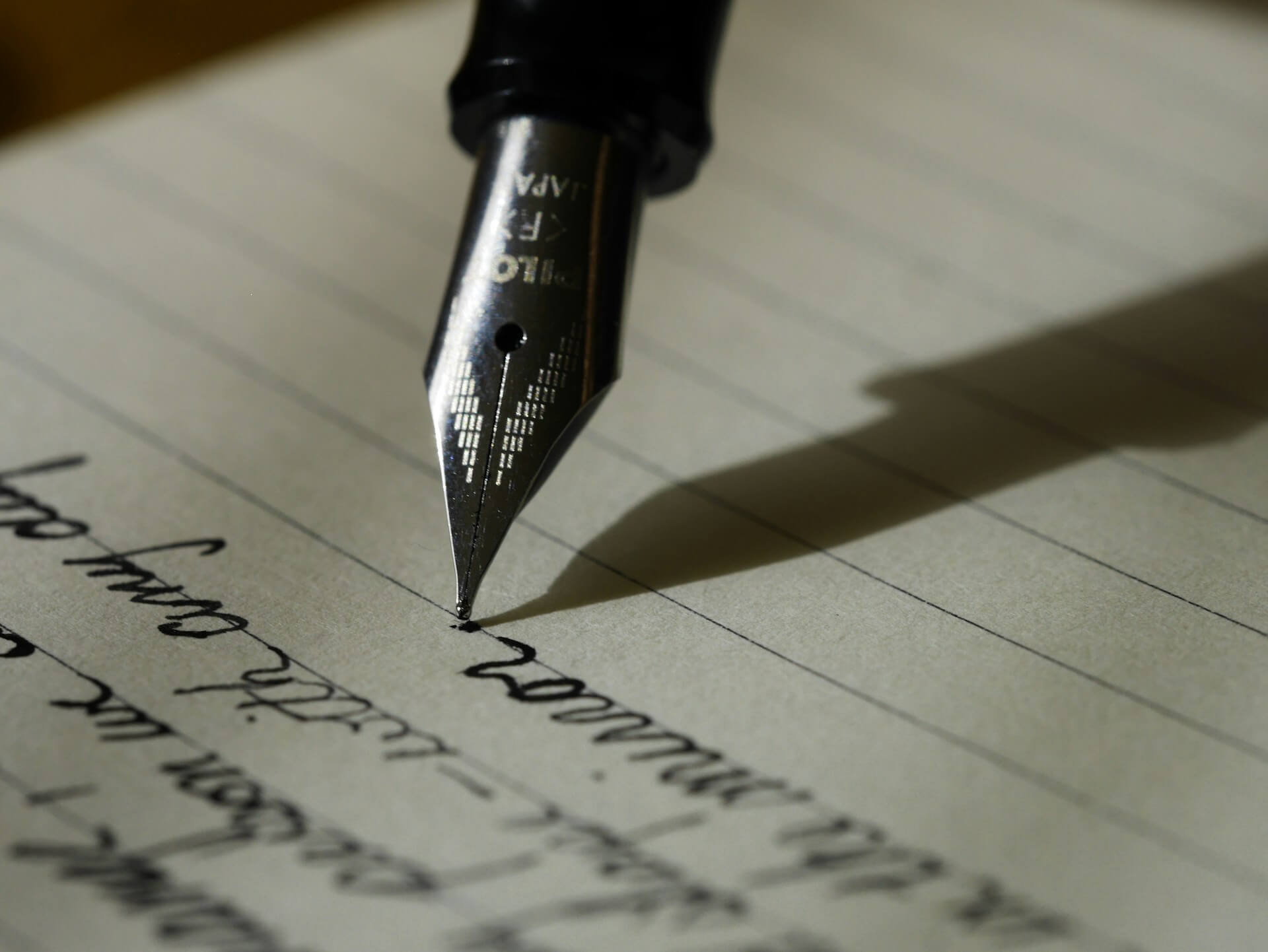
My relationship with writing has transformed to the point where it has become a joy to wake up with a notebook by my bed, a pen ready (no longer a lucky one — I have let go of that), and to jot down strange dreams, scattered images, unfinished thoughts. I never know what stories they will become. And perhaps that is the most beautiful part.
If this text can leave anything with those who write, let it be this: there is no urgency in finding your voice, and no obligation to remain the same. Every writer has their own time. Accepting that time does not delay us — it frees us. And it is often within that acceptance that writing finally begins to flourish.
Before school properly began, I was already decoding letters as if opening doors. I read syllable by syllable, word by word, and felt a kind of private electricity when meaning appeared — even advertisements and lists felt like secrets waiting to be unlocked. Reading was, from the start, a quiet enchantment I wanted to master.
At home, that hunger was fed with a naturalness that still moves me today, largely thanks to my father, who never questioned or discouraged my appetite for books.
Then there was an inaugural moment — one of those that stays lodged in the body, like a scent that never fades. A Círculo de Leitores catalogue lying on my grandmother’s kitchen table, glossy and full of promise. I didn’t want “a book”; I wanted that one. And that was how I chose The Black Tulip. Perhaps because of the title. Perhaps because of the cover. Perhaps because, even then, I had already developed a fascination for Dumas and for adventures that made the heart race.
I still remember the plastic being peeled away, the row of twelve books lined up, their weight and texture, the sound of the pages. For me, books have always been sensory objects — almost alive. And reading, long before I knew what writing was, began there to shape something essential: the way I saw the world.
At primary school, writing did not appear as a heavy obligation, but as a natural continuation of reading. My teacher, Dona Mercedes, gave us compositions with simple, almost innocent titles: What do you want to be when you grow up? It’s raining — what will you do after school? Tomorrow is Saturday — what are your plans? Or even, If tomorrow were the year 2050, what do you think the world would be like?
At the time, I wrote without thinking much about it. Only later did I realise how important those exercises were. They planted a fundamental seed. They taught me to imagine, to organise thought, to trust that my voice — however small — had a place on the page. Writing entered my life as habit before it became challenge.
At home, language also arrived through voice. My grandfather was a history teacher, and a simple question about Portugal’s past was enough for him to turn the answer into a long, enthusiastic explanation. He spoke of centuries as if they were familiar people. My cousins often lost patience; I listened.
Only later did I understand that I had learned another essential lesson there: the ear also writes. I learned rhythm, cadence, pause. I learned that a good story depends not only on what is said, but on how it is said. History became living narrative, and listening was — without my knowing it — a form of learning how to write.
As time passed, I realised that the reading that truly shaped me as a writer did not stop with the books assigned at school. Those were important and gave me references, but it was outside the curriculum that my curiosity expanded. I began to seek out authors I had not been given, voices from other countries, other cultures, other sensibilities. Each book was a displacement.
Language became more conscious, more demanding. And quietly, my writing began to change. For a long time, I wrote only for myself. I rewrote, deleted, persisted. I read far more than I showed. Gradually, I began to recognise a voice — still fragile, still forming, but mine.
During that period, I tried to join other writers and poets. Many wrote according to strict rules, fixed metres, and strong formal awareness. That made me nervous — and, to be honest, it still does. Writing in that way felt as though it pulled me away from what truly moved me.
I do not write from rules. I write from imagination. I follow it when it appears, allow myself to be carried by it, and only afterwards do I let go. For me, writing begins in an instinctive place, not a technical one. What matters most has never been perfect form, but feeling. If words do not carry emotion, truth, something alive, everything else loses meaning.
It took me time to understand that this was not a flaw, but a choice. And that rules, when they make sense, can come later — to organise something that already exists, not to prevent it from being born.
The first time I decided to send a text to be read beyond my intimate circle was to Diário de Notícias, which at the time had a section for young writers called DN Jovem. I sent the piece almost in secret. Two weeks later, I received an email telling me I had won first place and that the text would be published as a featured piece.
I remember the shock, the disbelief. The first person I told was, naturally, my father. The second was my boss and mentor, Guta Moura Guedes, who simply said: “I know this is only the beginning.” That sentence stayed with me — not as a point of arrival, but as a quiet push forward.
From there, the next step felt inevitable. I began submitting work to literary competitions outside Portugal, often in the same language but in very different contexts. The text had to stand on its own, without cultural shortcuts. That confrontation was demanding and deeply formative. It requires clarity, precision, attention to detail. Above all, it forces us to accept that writing grows through contact with other voices.
Over time, I also realised that writing does not have to be a solitary path. Building a small circle of fellow writers around me — people who share the same honesty, who love words and respect creativity — helped me continue. Not to find ready-made answers, but to share doubts, enthusiasm and silence. Somehow, we always end up finding our voice alone — but not necessarily in isolation.
A voice cannot be forced. It is found. Sometimes early, sometimes later. Writing has cycles, just like we do. It changes with the years, with life, with what we go through. Mine changed radically. I moved from free poetry to poetic prose, then to short texts, chronicles and humorous writing. I write differently now — and that is not loss, it is growth.
Only after accepting that change did I truly begin to enjoy writing. Today, I write with great pleasure. I travel with words between poetry, prose, and wherever they wish to go. For me, language is variable and multiplicative — as subjective as life itself.
My relationship with writing has transformed to the point where it has become a joy to wake up with a notebook by my bed, a pen ready (no longer a lucky one — I have let go of that), and to jot down strange dreams, scattered images, unfinished thoughts. I never know what stories they will become. And perhaps that is the most beautiful part.
If this text can leave anything with those who write, let it be this: there is no urgency in finding your voice, and no obligation to remain the same. Every writer has their own time. Accepting that time does not delay us — it frees us. And it is often within that acceptance that writing finally begins to flourish.

Comments